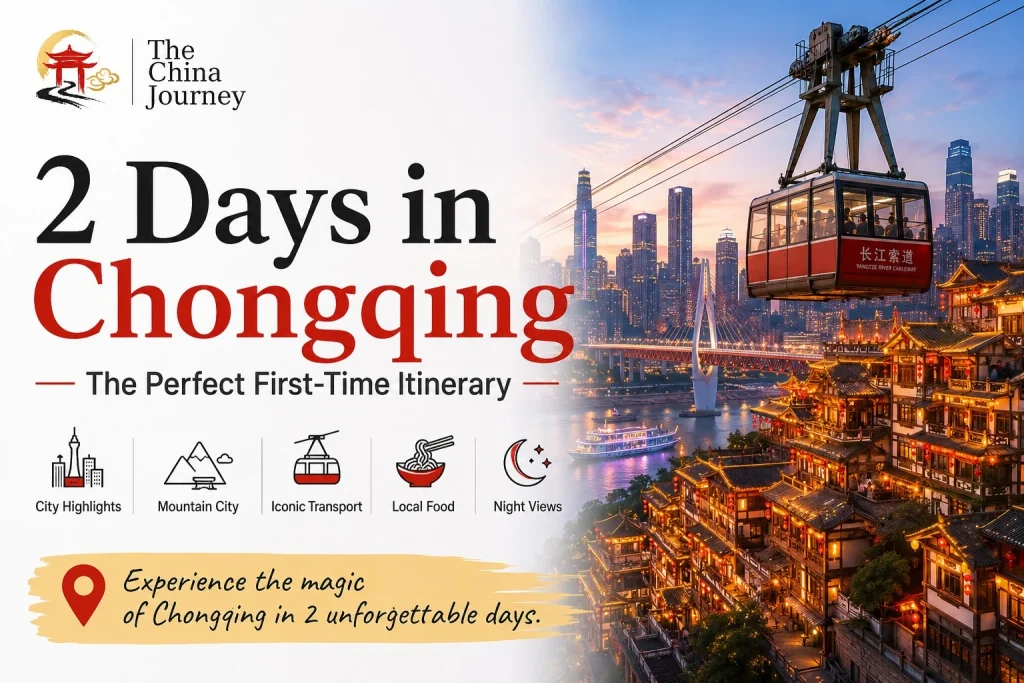
Plan your 2-day Chongqing trip: high-efficiency itinerary covering landmarks, night views, magical topography, food, budget, and must-avoid mistakes.
Table of Contents
Quick Answer: How Should You Spend 2 Days in Chongqing?
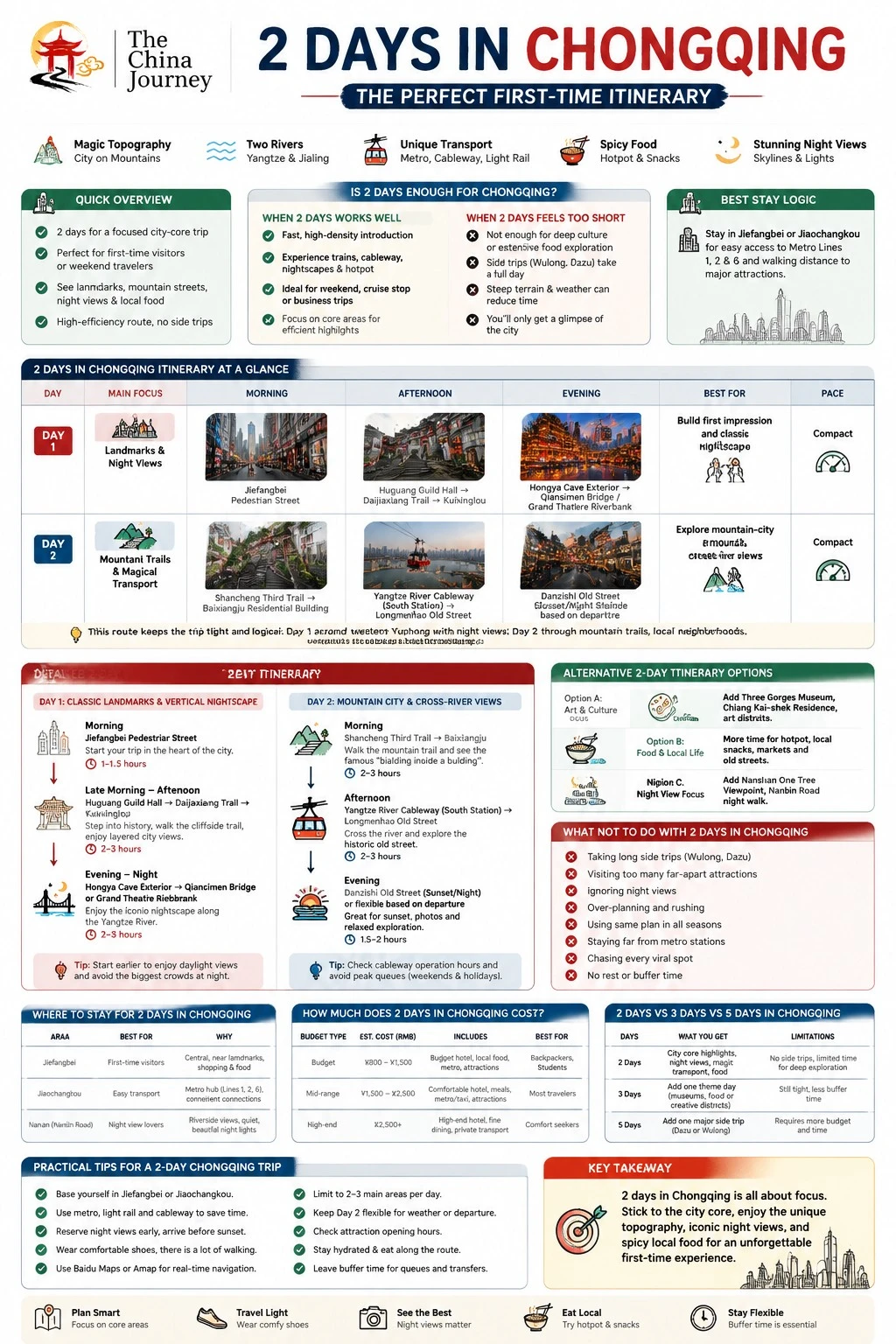
Two days in Chongqing work best as a focused city-core trip. Base yourself in Jiefangbei or Jiaochangkou, then spend your time on vertical streets, landmark views, nightscapes, metro-linked routes, and local food. From my experience, this is enough for a strong first impression, but not enough for side trips or slow exploration.
Best for: First-time visitors, weekend travelers, or anyone with limited time who wants a focused, high-impact Chongqing experience.
Main route logic: Day 1 covers Yuzhong Peninsula landmarks and night views; Day 2 focuses on mountain trails, residential neighborhoods, and cross-river perspectives.
What you can cover: Jiefangbei, Hongya Cave exterior, Qiansimen Bridge or Grand Theatre riverbank night views, Liziba light rail, one mountain trail, Baixiangju residential building, hotpot, and local snacks.
What to skip: Long-distance side trips like Wulong or Dazu, peripheral creative parks, university-town areas, or attractions requiring long queues.
Travel pace: High-density and compact; allocate enough time at each stop for photos and observation.
Best stay logic: Stay in Jiefangbei or Jiaochangkou for direct access to metro lines 1, 2, and 6 and walking distance to most core attractions.
Main warning: Avoid full-day side trips; focus entirely on central Yuzhong and south bank areas.
Comprehensive 2 day Chongqing itinerary infographic
Is 2 Days Enough for Chongqing?
When 2 Days Works Well
Two days works perfectly if your goal is a fast, high-density introduction to Chongqing’s core highlights.
You can experience trains passing through buildings, cliffside trails, the Yangtze River Cableway, Hongya Cave nightscape, and a hotpot dinner.
Ideal for weekend visitors, cruise passengers on a short shore stop, or business travelers adding a city visit.
Concentrating on Jiefangbei, Xiaoshizi, and the south bank allows you to see vertical streets, bridges, and highlights efficiently.
My advice: prioritize key landmarks and iconic perspectives over trying to see everything.
When 2 Days Feels Too Short
Two days becomes insufficient if you aim for cultural depth, extensive food exploration, or multiple photography angles.
Visiting side trips like Wulong or Dazu Rock Carvings will consume a full day and disrupt city core experiences.
Chongqing’s steep streets, stairs, and elevated walkways require time and energy, which can be challenging for elders or children.
Rain, fog, and summer heat can reduce effective sightseeing hours.
In these cases, two days only gives a glimpse of the city’s most striking features.
How to Plan a 2-Day Chongqing Itinerary
Two Rivers Night Cruise chongqing
Planning a 2-day Chongqing trip requires focus, efficiency, and careful area selection to maximize the city core experience without spreading yourself too thin. Prioritize landmarks, nightscapes, mountain-city paths, and signature local food while minimizing long-distance transfers and unnecessary detours.
Plan by area and elevation: Concentrate each day on one main zone. Day 1 should cover western Yuzhong Peninsula landmarks, evening riverfront night views, and dense walking paths. Day 2 focuses on mountain trails, Baixiangju, and cross-river perspectives on the south bank.
Build the city core first: Ensure you hit the essential experiences—Jiefangbei, Hongya Cave, Qiansimen Bridge, Shancheng Trail, and one authentic hotpot meal.
Separate high-energy segments: Alternate intense walking with easier transit, short rests, or light sightseeing to maintain energy for cliffside paths and night views.
Protect night-view timing: Schedule at least one evening for Hongya Cave or Qiansimen Bridge, arriving 30–45 minutes early to secure optimal viewpoints.
Check reservations and queues: Pre-confirm hours for the Yangtze River Cableway, Huguang Guild Hall, or any paid attractions; plan around busy weekends.
Keep meals on route: Align dining with the day’s path to avoid long detours; afternoon rest breaks support energy for evening highlights.
Departure day planning: Allocate 2–3 hours for airport or train departures, including transfer, security, and potential traffic delays.
This approach ensures your 48 hours in Chongqing remain concentrated, memorable, and manageable while leaving room for spontaneous local experiences.
2 Days in Chongqing Itinerary at a Glance
Day
Main Focus
Morning
Afternoon
Evening
Best For
Pace
Day 1
Landmarks & Night Views
Jiefangbei Pedestrian Street
Huguang Guild Hall → Daijiaxiang Trail → Kuixinglou
Hongya Cave exterior → Qiansimen Bridge / Grand Theatre riverbank
Build first impression and classic nightscape
Compact
Day 2
Mountain Trails & Magical Transport
Shancheng Third Trail → Baixiangju
Yangtze River Cableway (south station) → Longmenhao Old Street
Danzishi Old Street (sunset/night) or flexible based on departure
Explore mountain-city streets, cross-river views
Compact
This route keeps the trip tight and logical. Day 1 stays around western Yuzhong and ends with classic night views. Day 2 moves through mountain trails, local neighborhoods, the Yangtze River Cableway, and south-bank viewpoints. The goal is simple: reduce backtracking and make each major experience feel connected.
2-Day Chongqing Itinerary: Day 1 and Day 2
Day 1: Classic Landmarks & Vertical Nightscape
Chongqing Shancheng Alley
Morning: Heart of the City – Jiefangbei
Start at Jiefangbei (解放碑), the most practical first stop for a short Chongqing trip. It is central, easy to reach from Jiaochangkou or Linjiangmen metro stations, and open without tickets or reservations. It also gives you a quick sense of modern Chongqing before the route moves into older streets and cliffside paths.
Why start here: Jiefangbei gives you an immediate sense of modern Chongqing before the route moves into older streets, cliffside paths, and night views.
Time needed: Around 1–1.5 hours is enough for photos, a short walk, and a quick snack.
Best for: All first-time visitors, especially those who need a simple, central start.
Reservation rules: No reservation or ticket is needed.
Route connection: From here, you can walk about 10–15 minutes toward Huguang Guild Hall or Daijiaxiang, making it a natural lead-in to the afternoon route.
Afternoon: Historical Depth & Cliff Walk
The afternoon moves from the modern center into Chongqing’s older and more vertical side. Huguang Guild Hall adds historical context, while Daijiaxiang Trail gives you a direct cliffside walking experience. This is where Chongqing’s “8D city” feeling becomes clear: roads, rooftops, bridges, and building levels stop following normal ground-floor logic.
Main experience: Combine a historical stop with a cliffside walk, so the route feels cultural and spatial, not just visual.
Connection from morning: Jiefangbei to Huguang Guild Hall is manageable on foot, then continue toward Daijiaxiang by walking or taking a short ride.
Effort level: Moderate. Daijiaxiang is easier when walked downhill, but the full day’s walking will add up.
Photography value: Huguang Guild Hall works for traditional architecture; Daijiaxiang gives views toward the Jialing River, Qiansimen Bridge, and the upper levels of Hongya Cave.
Weather and crowds: Daijiaxiang is exposed, so rain reduces the experience. Huguang Guild Hall requires a ticket but is usually more controlled than the busiest free viewpoints.
Optional skip: If you are not interested in historical buildings, skip Huguang Guild Hall and save more time for Daijiaxiang, Kuixinglou, and the evening view.
Evening: Ultimate Nightscape Check-In
Your first evening should focus on Hongya Cave’s exterior night view. Do not spend too long inside the building, which is commercial and crowded. In my experience, the stronger memory comes from seeing the full scene from Qiansimen Bridge or the Grand Theatre riverbank, where the lights, river, bridges, and high-rises appear together.
Core night view: Hongya Cave exterior, Qiansimen Bridge, and Grand Theatre riverbank views.
Timing: Check the seasonal light-up time before going. In many travel reports, visitors plan around roughly 7:00–10:00 pm, but timing can change.
Crowds: Weekends and holidays can be extremely crowded. Arrive 30–45 minutes early for a better position; peak seasons may require more time.
Photo points: The Grand Theatre riverbank and Qiansimen Bridge pedestrian area are strong free viewpoints.
Dinner strategy: Eat early around Jiefangbei/Hongya Cave before the night-view rush, or eat later after returning from the viewpoint.
Return logistics: Expect queues near metro stations and bridges after the light show period. Staying in Jiefangbei or Jiaochangkou makes the return much easier.
Day 1 Food and Rest Logic
Keep Day 1 food practical. Have breakfast near your hotel or Bayi Food Street, then place lunch around Xiaoshizi or Chaotianmen after Huguang Guild Hall. The key break is mid-afternoon: rest for at least 30 minutes before the night-view route. For dinner, either eat early before the crowds build or wait until after the viewpoint visit. Avoid a heavy hotpot meal right before a long night walk.
Day 2: Mountain City Texture & Magical Transport
Yangtze River Cable Car gliding over Chongqing
Morning: Pathways & Local Life
Use the second morning for Chongqing’s mountain-city texture. Start around 8:30–9:00, when it is cooler and less crowded. Shancheng Third Trail and Baixiangju both require walking, stairs, and patience, but they show Chongqing as a lived-in vertical city, not just a skyline.
Route logic: Start from the Jiefangbei/Jiaochangkou area, then move toward Shancheng Third Trail and Baixiangju.
Why morning works best: Walking-heavy routes are easier before heat, crowds, and fatigue build up.
Accommodation connection: If you stay in Jiefangbei or Jiaochangkou, this route stays close and efficient.
Exploration pace: Use a medium pace. This is not only a photo route; the value is in the stairs, old buildings, river views, and residential layers.
Effort required: This is likely the most physically demanding part of the 2-day plan. Comfortable, non-slip shoes matter more than style.
Experience focus: Baixiangju adds the famous “magical residential building” feeling and gives useful angles for seeing the Yangtze River Cableway passing through the urban landscape.
Afternoon: Cross-River Cable & Opposite View
In the afternoon, shift from walking inside Yuzhong to crossing the river and looking back at the city. Although the Yangtze River Cableway north station near Xinhua Road is close to Baixiangju, queues can be long. For a 2-day route, I would use the south station at Shangxinjie first, then ride back toward Xiaoshizi.
Main transport experience: Yangtze River Cableway, preferably from the south station to reduce waiting time.
Sightseeing logic: The cableway is not just transport; it gives a fast cross-river view of Chongqing’s cliffs, buildings, and riverfront.
If leaving that evening: Keep the afternoon strict. Ride the cableway, return to Xiaoshizi, collect luggage near your hotel, then head to the airport or train station.
If staying another night: Add Longmenhao Old Street and Xiahaoli for a slower south-bank afternoon with cafés, restored lanes, and river viewpoints.
Risk control: Do not build the afternoon around long queues. On departure day, every delayed line can affect your train or flight.
Best route choice: South station first, then cross back to Yuzhong, is usually safer than joining the heavy queue at the north station.
Evening: Wrap-Up & Departure
Situation
Best Evening Plan
What to Avoid
Leaving Chongqing that evening
Return to your hotel or a major metro hub by late afternoon, collect luggage, eat a quick meal nearby, and leave early for the airport or train station.
Avoid long-queue attractions, distant viewpoints, mountain areas, or anything that cannot be stopped quickly.
Staying one more night
Continue from Longmenhao toward Danzishi Old Street for sunset or night views across the river, then eat along the south bank or return to your hotel area.
Avoid adding another difficult uphill route or remote night viewpoint that makes the return inconvenient.
Your last evening depends on your departure plan. If you leave that night, treat it as a controlled exit. If you stay one more night, Danzishi or the south bank can give you a calmer final view of Yuzhong. Do not turn the final evening into a risky detour.
Day 2 Food and Departure Logic
Keep Day 2 flexible and departure-safe. Eat breakfast near your hotel, then choose lunch near Baixiangju, Longmenhao, or your next transfer point. If leaving that evening, store luggage at your hotel and return before heading to the station or airport. Add at least 30 extra minutes for traffic and station movement. For Jiangbei Airport T3, use metro line 3 or 10 when possible. For Chongqing North Railway Station, use line 10 or the Loop Line. For Chongqing West Railway Station, the Loop Line is the practical choice.
Alternative 2-Day Chongqing Itinerary Options
Itinerary Style
Best For
Day 1 Focus
Day 2 Focus
Main Trade-Off
Classic First-Time Route
Most first-time visitors who want landmarks, terrain, food, and night views.
Jiefangbei, Hongya Cave exterior, Qiansimen Bridge night views.
Shancheng Trail, Baixiangju, Yangtze River Cableway, south-bank views.
Efficient and complete, but still compact and slightly tiring.
Food-Focused Route
Travelers who care most about hotpot, noodles, snacks, and local meals.
Food streets, local snacks, hotpot, and evening city views.
Noodles, Jianghu-style dishes, casual food areas, and lighter sightseeing.
Major sights are compressed, and the route becomes less visually complete.
Night-View Photography Route
Photographers chasing skyline, bridges, and blue-hour views.
Afternoon-to-night skyline and Hongya Cave viewpoints.
Morning urban texture, Baixiangju, cableway angles, and south-bank sunset.
Very dependent on weather, light, and crowd control.
Slow-Paced Route
Families, older travelers, or visitors who dislike heavy walking.
Easier central sights, museum or indoor stops, and a lighter night-view plan.
Shorter old-street walks, cafés, and low-effort viewpoints.
Misses some of Chongqing’s most intense mountain-city walking experiences.
Rainy-Day Backup Route
Travelers facing rain, fog, or poor outdoor visibility.
Indoor cultural stops, covered malls, bookshops, and shorter outdoor views.
Indoor viewpoints, cafés, restored streets, and weather-safe food stops.
Reduces the strongest outdoor terrain and skyline experience.
Two days are too short for every travel style at once. Choose one main goal: classic highlights, food, photography, comfort, or weather protection. A focused route will feel stronger than a long checklist that tries to combine landmarks, food hunting, night photography, and slow travel in the same 48 hours.
What Not to Do With 2 Days in Chongqing
Mistake: Adding Wulong or Dazu Rock Carvings to a 2-day city itinerary. Better approach: Save them for a longer trip. Each requires long transport time and will remove the core city experience from your schedule.
Mistake: Staying on Nanbin Road or Nanshan just for a better view. Better approach: Stay in Jiefangbei or Jiaochangkou. For 2 days, transport efficiency is more valuable than a hotel view.
Mistake: Planning every stop like a strict checklist with no buffer. Better approach: Limit each day to a few core areas and leave time for stairs, crowds, photos, rest, and route confusion.
Mistake: Wearing high heels, leather shoes, or new shoes. Better approach: Wear your most comfortable non-slip walking shoes. Chongqing’s slopes and stairs punish bad footwear fast.
Mistake: Going to Hongya Cave at night without checking light-up time, viewpoints, or crowd flow. Better approach: Choose your viewpoint in advance and arrive 30–45 minutes early, especially on weekends and holidays.
Mistake: Scheduling distant sights on your departure afternoon. Better approach: Keep the final half-day near your hotel, metro line, or transport route, with activities that can be stopped quickly.
Mistake: Crossing the city just for one viral hotpot or noodle shop. Better approach: Eat near your day’s route. In Chongqing, strong local food is everywhere, and saving time often matters more than chasing one famous name.
Where to Stay for 2 Days in Chongqing
For a 2-day Chongqing trip, accommodation should be chosen for transport efficiency, not views. Jiefangbei or Jiaochangkou works best because you can walk to several core sights and connect quickly to metro lines 1, 2, and 6. In Chongqing’s hilly terrain, one extra transfer or uphill walk can cost real energy. I would choose a practical central base over a scenic but inconvenient hotel.
Jiefangbei / Jiaochangkou Core Area
Central transport hub; walking distance to Hongya Cave, Bayi Street, metro to Liziba, Ciqikou, and Chongqing North Airport/train stations
Xiaoshizi / Chaotianmen
Close to metro lines 1 & 6; walking distance to Huguang Guild Hall and cableway north station; partial river views
Lianglukou / E’ling
Close to metro 1 & 3 transfer; cheaper hotels; good value
Nanbin Road / Danzishi
Front-facing river views; quiet environment
Guanyinqiao
Metro lines 3 & 9; easy airport/north station access; rich local dining and nightlife
Things to Check Before Booking:
Verify actual walking distance to the nearest metro station entrance using maps or street view.
Check the slope and stair conditions between hotel and metro; Chongqing’s hills are steep.
Ensure safe and well-lit return routes at night from the city’s attractions.
Confirm luggage storage if arriving early or leaving late.
Read reviews for noise from streets, construction, or nightlife.
Check proximity to key transfer points if you plan to use the Yangtze River Cableway or other public transport.
How Much Does 2 Days in Chongqing Cost?
Budget Type
Accommodation
Food
Transport
Tickets / Experiences
Total Estimate
Budget
¥150–¥300
¥200–¥300
¥50–¥100
¥50–¥100
¥450–¥800
Comfortable
¥300–¥600
¥300–¥500
¥100–¥200
¥100–¥200
¥800–¥1,500
Premium
¥600+
¥500+
¥200+
¥200+
¥1,500+
Accommodation is the biggest variable, especially around Jiefangbei, where mid-range hotels often cost ¥400–¥600 per night and rise during holidays. Food can stay affordable: snacks are usually ¥10–¥25, hotpot ¥80–¥150 per person, and Jianghu-style dishes ¥60–¥100. Metro rides usually cost ¥2–¥7, with occasional taxis for short links. Paid stops may include the Yangtze River Cableway, Huguang Guild Hall, or observation decks, while Hongya Cave exterior views, Qiansimen Bridge, Shancheng Trail, Liziba, and Baixiangju are free. This estimate excludes transport to and from Chongqing.
No depth or flexibility; exhausting; cannot include side trips
3 Days
Most first-time visitors wanting a more comfortable pace
2-day highlights plus 1–2 additional city sights, more food exploration
Still no room for major side trips; adding them compresses city experience
5 Days
Travelers wanting full city coverage or a main side trip
Full city core and secondary attractions, plus one full-day side trip (e.g., Wulong or Dazu)
Requires longer vacation and higher budget; may be too long for those seeking only a quick introduction
Choose by travel goal. Two days are for fast highlights, 3 days give a more comfortable city route, and 5 days allow deeper city coverage plus one major side trip. If this is your first Chongqing visit and you have flexibility, 3 days is the better minimum.
Practical Tips for a 2-Day Chongqing Trip
Use the 70% rule: Plan only 2–3 core areas or experiences per day. Leave at least 30% of your time for walking, stairs, crowds, wrong turns, rest, and spontaneous stops.
Treat walking as part of the trip: Chongqing is not a flat city where you simply move between sights. Stairs, slopes, bridges, elevators, and confusing levels are part of the real experience.
Use taxis strategically, not constantly: Metro is better for predictable movement, but taxis are useful for short links, night-view returns, and reaching the Yangtze River Cableway south station to reduce waiting.
Plan night views like a real activity: Do not treat Hongya Cave or Qiansimen Bridge as a casual after-dinner walk. Check light-up time, choose your viewpoint, and arrive early before weekend crowds build.
Always prepare a rainy-day backup: Chongqing can be rainy, foggy, and humid. If outdoor trails or viewpoints become weak, switch to museums, indoor viewpoints, malls, cafés, old buildings, or covered food stops.
Be conservative on departure day: If you leave Chongqing on Day 2, keep the afternoon close to your hotel, metro line, or transport route. Avoid distant places and anything with uncertain queues.
Use hotel luggage storage: If you arrive early or leave late, store your luggage at the hotel. Dragging bags through Chongqing’s stairs, slopes, and crowded metro stations will ruin the rhythm fast.
Do not chase one viral restaurant: Eat near your route. In Chongqing, good noodles, hotpot, snacks, and local dishes are widely available, and saving travel time matters more than crossing the city for one famous shop.
Wear serious walking shoes: This is not the city for new shoes, high heels, or slippery soles. Comfortable, non-slip shoes are more important than any other travel item on this itinerary.
FAQ About Spending 2 Days in Chongqing
Is 2 days enough for Chongqing?
Yes, 2 days are enough if your goal is a focused first impression of Chongqing. You can cover the core city experience: Jiefangbei, Hongya Cave exterior views, Qiansimen Bridge or Grand Theatre night views, Shancheng Trail, Baixiangju, the Yangtze River Cableway, and local food. It is not enough for deep culture, slow food exploration, or major side trips.
Will 2 days in Chongqing feel too rushed?
It will feel compact, but it does not have to feel chaotic. The key is staying in Jiefangbei or Jiaochangkou, grouping sights by area, and avoiding long-distance detours. If you try to add too many famous spots, the trip becomes a checklist. If you keep each day to a few strong experiences, the pace works.
Where should I stay for 2 days in Chongqing?
Stay in Jiefangbei or Jiaochangkou. For a 2-day trip, location matters more than hotel views, design, or atmosphere. This area gives you fast access to metro lines 1, 2, and 6, walking access to several core sights, and easier returns after night views. Nanbin Road and Nanshan may look attractive, but they cost too much time.
How much money do I need for 2 days in Chongqing?
For a comfortable 2-day trip, expect around ¥800–¥1,500 per person, excluding flights or trains to Chongqing. Budget travelers can spend less if they choose cheaper hotels and mostly use the metro. Your biggest variable is accommodation. Food can stay affordable, while most core views and walking routes are free.
Can I visit Wulong or Dazu with only 2 days in Chongqing?
I would not recommend it. Wulong and Dazu are worth visiting, but they require too much transport time for a 2-day city itinerary. Adding either one means sacrificing the main Chongqing experience: the vertical city center, mountain trails, night views, cableway, and food. Save them for a 3-day-plus or 5-day trip.
What should I avoid on a 2-day Chongqing itinerary?
Avoid three things: staying far from the core area, adding a full-day side trip, and planning a route with no rest or transport buffer. Also avoid chasing one viral restaurant across the city. Chongqing is physically demanding, and small mistakes in distance, slopes, or timing become much bigger on a short trip.
Is Chongqing good for a weekend trip?
Yes. Chongqing works well for a weekend because its core experiences are intense and close together. In 2 days, you can see night views, steep streets, old neighborhoods, river crossings, and hotpot culture. The trip will be busy, but rewarding if the route stays tight.
I’m Anthony, the founder and editor of The China Journey.
I create practical, experience-based guides covering travel, food, and culture across China, with a focus on helping international travelers make clear planning decisions.
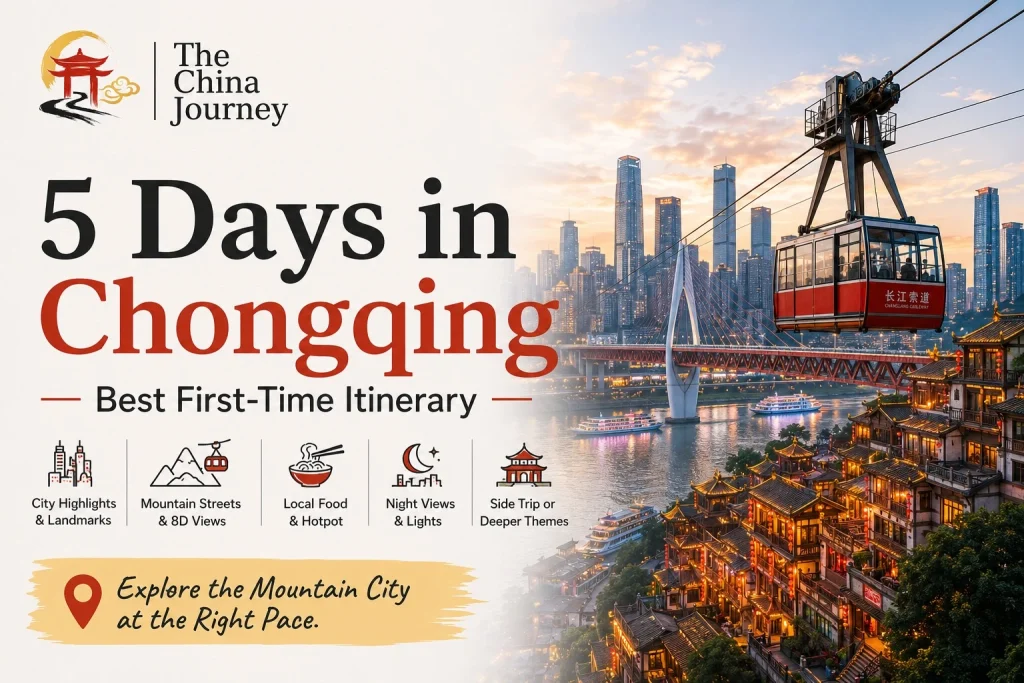
Plan 5 days in Chongqing with city highlights, mountain streets, food, night views, Dazu or Wulong side-trip choices, costs, hotels, and practical tips.
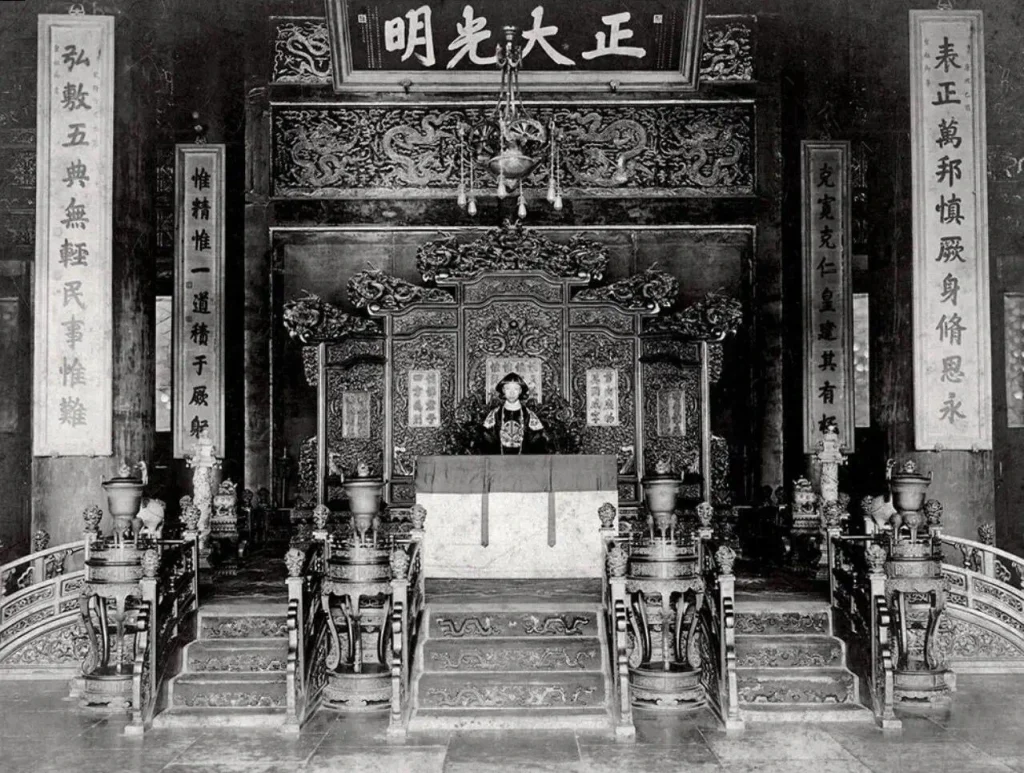
The last resident of the Forbidden City was Emperor Puyi, who lived there until his expulsion in 1924 after the fall of the Qing Dynasty.
Plan Your China Trip with Our Experts
Share your travel ideas, and we’ll help you plan a smooth, personalized trip across China.
Plan Your China Trip with Our Experts
Share your travel ideas, and we’ll help you plan a smooth, personalized trip across China.
Work with Us as a Local Guide in China
We’re looking for experienced, part-time local guides to serve international travelers.
Requirements:
• Fluent in at least one foreign language • 3–5 years guiding international visitors • Able to operate in multiple regions in China • Competitive and reasonable pricing • Proven customer reviews or testimonials • Professional, reliable, and responsive • Flexible availability for custom trips
Just a quick heads-up — a helpful user named Volker let me know that some of the non-English content on this site may not be accurate.
This site is a one-person project I run part-time. I research and publish all the content myself, and the translations are currently done by machine (Google Translate). Balancing accuracy and accessibility across multiple languages is a real challenge.
If you spot any errors, I recommend switching to the English version using the button at the bottom left. I’ll continue working to improve the translations over time.
I truly appreciate your understanding. And if you have any suggestions, feel free to leave a comment — it means a lot to me.