Shaolin Temple

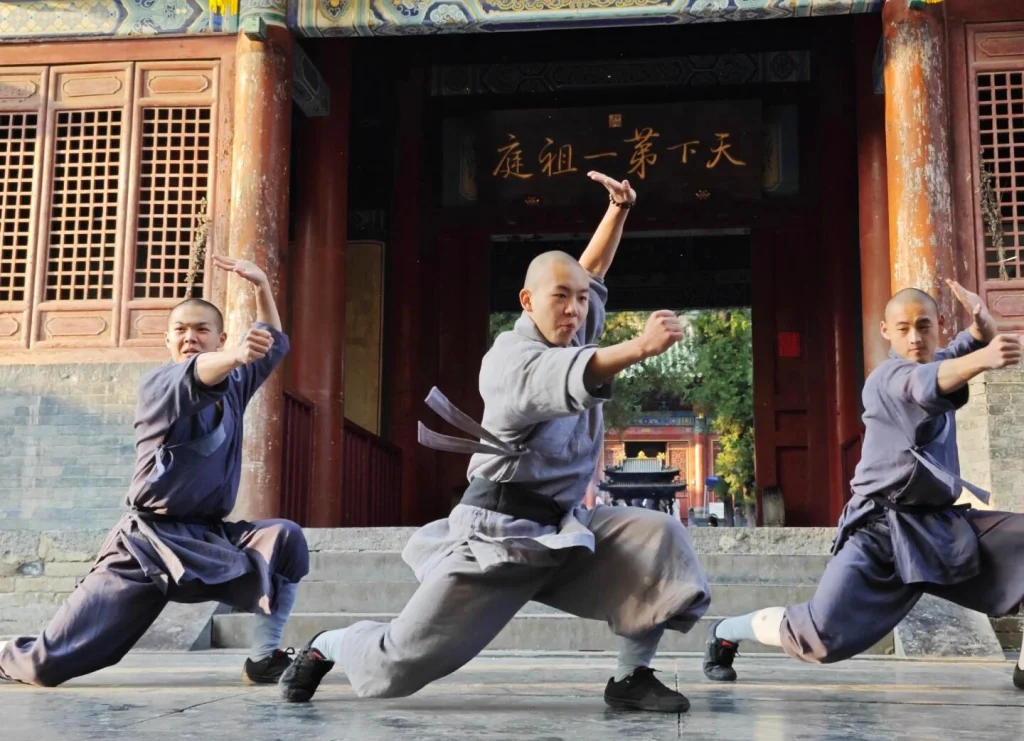
Shaolin Kung Fu performance — Shaolin monks demonstrating traditional martial arts poses in front of the temple courtyard - 2026 Shaolin Temple Travel Guide: Plan Your Visit - The China Journey - 2026 Shaolin Temple Travel Guide: Plan Your Visit - The China Journey
Explore the Shaolin Temple with tips on transport, highlights, Kung Fu shows, hiking, tickets, best seasons, and insider travel advice.
Shaolin Kung Fu performance — Shaolin monks demonstrating traditional martial arts poses in front of the temple courtyard - 2026 Shaolin Temple Travel Guide: Plan Your Visit - The China Journey - 2026 Shaolin Temple Travel Guide: Plan Your Visit - The China Journey

Table of Contents

Perched on the slopes of Mount Song in central China, the Shaolin Temple is far more than just a tourist stop — it’s a living symbol of Chinese culture. As the birthplace of Chinese Kung Fu and the cradle of Chan (Zen) Buddhism, Shaolin blends martial arts, spirituality, and stunning natural beauty in a way few places on Earth can.

Main Gate of Shaolin Temple with traditional Chinese architecture - 2026 Shaolin Temple Travel Guide: Plan Your Visit - The China Journey - 2026 Shaolin Temple Travel Guide: Plan Your Visit - The China Journey

Listed as a UNESCO World Heritage Site, the temple offers an immersive window into the heart of traditional Chinese values — discipline, harmony, and resilience. Visitors can witness breathtaking Kung Fu performances by warrior monks, explore ancient prayer halls and pagodas, or hike forested mountain trails that once sheltered legendary martial artists and monks in meditation.

Whether you’re drawn by the action of Shaolin Kung Fu, the peace of Zen teachings, or the fresh mountain air of Songshan, a visit here offers a rare dual experience: cultural pilgrimage and outdoor adventure — all in one unforgettable day.

A Timeline of Shaolin: 1,500 Years of Zen and Kung Fu

The Shaolin Temple stands as both the birthplace of Chinese Chan (Zen) Buddhism and the cradle of Shaolin Kung Fu. Its 1,500-year legacy weaves together religion, philosophy, martial arts, and political history.

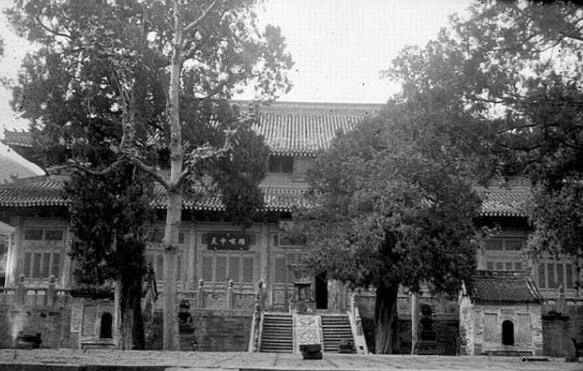
Historic 1907 photo of Shaolin Temple’s ancient main hall - 2026 Shaolin Temple Travel Guide: Plan Your Visit - The China Journey - 2026 Shaolin Temple Travel Guide: Plan Your Visit - The China Journey

1. Founding Era (495 CE)

Built in 495 CE during the Northern Wei Dynasty to house the Indian monk Batuo, the temple was nestled among the forests of Mount Shaoshi — hence the name Shaolin, meaning “Young Forest.” It soon became an important Buddhist center in the Central Plains.

2. Birth of Chan (527 CE)

Around 527 CE, Bodhidharma arrived from India and meditated for nine years in a cave near the temple, teaching a new path of self-cultivation known as Chan Buddhism. From then on, Shaolin became the ancestral home of Chinese Zen.

3. Rise of Kung Fu (Sui–Qing Dynasties)

Shaolin’s warrior monks gained fame after helping Emperor Taizong of the Tang suppress rebellion. Their martial practice evolved into a refined system that united Zen philosophy and combat skill — “Zen as the soul of martial arts, and martial arts as the expression of Zen.” By the Ming and Qing periods, Shaolin forms such as Luohan Fist and staff fighting had reached great sophistication.

4. Modern Revival

The 1982 film Shaolin Temple revived global fascination with Kung Fu, turning Shaolin into a symbol of Chinese culture. In 2010, it became part of the UNESCO World Heritage Site “Historic Monuments of Dengfeng.” Today, Shaolin monks tour worldwide, keeping alive a tradition that bridges East and West, mind and body.

Culture & Spirituality: Where Kung Fu Meets Zen

Zen and Kung Fu: A Spiritual Practice in Motion

Shaolin monks performing traditional martial arts routine - 2026 Shaolin Temple Travel Guide: Plan Your Visit - The China Journey - 2026 Shaolin Temple Travel Guide: Plan Your Visit - The China Journey

At Shaolin, Kung Fu isn’t just about fighting — it’s a form of spiritual practice. The core belief of “Chan Wu Yi Ti” means “Zen and martial arts as one.” Every movement is an act of meditation, helping monks sharpen focus, discipline, and inner clarity.

Shaolin Kung Fu includes both bare-hand forms like Arhat Fist and weapons routines like the staff and broadsword. Skills such as Iron Head and One-Finger Zen show the deep control and concentration behind each technique. Today, the Shaolin monk troupe performs worldwide, and martial arts schools in Dengfeng train thousands of students, making Shaolin a global symbol of Chinese culture.

Buddhist Legacy: The Spiritual Core of the Temple

 
Yellow Zen Buddhism inscription wall at Shaolin Temple entrance - 2026 Shaolin Temple Travel Guide: Plan Your Visit - The China Journey - 2026 Shaolin Temple Travel Guide: Plan Your Visit - The China Journey

As the birthplace of Chan Buddhism, Shaolin is also a sacred place of worship. Its layout — from the mountain gate to the Buddha halls — reflects the path from entry to enlightenment. Ancient murals, carved steles, and early morning chants all offer a glimpse into its spiritual legacy.

Here, martial strength and peaceful wisdom live side by side — a balance that defines the true essence of Shaolin.

Location & How to Get to the Shaolin Temple

Where Is the Shaolin Temple?

The Shaolin Temple is located in Dengfeng City, part of Zhengzhou, Henan Province, central China. It sits on the western slope of Mount Song, one of China’s five sacred mountains. Behind the temple rises the Five Breast Peaks, while Mount Shaoshi stands like a green screen in front. The temple is about 13 km from Dengfeng city center and 80 km from downtown Zhengzhou.

How to Get There

Night view of Zhengzhou Xinzheng International Airport boarding gate - 2026 Shaolin Temple Travel Guide: Plan Your Visit - The China Journey - 2026 Shaolin Temple Travel Guide: Plan Your Visit - The China Journey

By Air

The nearest airport is Zhengzhou Xinzheng International Airport (CGO). You can reach the temple from the airport in two main ways:

  • Airport shuttle bus: Direct line to Dengfeng, stopping near Shaolin International Hotel (~2 hours).

  • Metro + train combo: Take Metro Line 2 to Zhengzhou East Station, then catch an intercity train to Dengfeng East Station (~30 minutes), and take a 20-minute taxi to the temple. Total time: ~2.5 hours. Taxi fare ~¥150.

By Train

If you arrive at Zhengzhou Railway Station or Zhengzhou East Station, you have several options:

  • Long-distance tourist bus: Departs every 30 minutes from Zhengzhou Bus Center to Dengfeng (~1.5 hours, ~¥30).

  • New “station-to-station” bus service (launched Oct 2024): From Zhengzhou Center to Dengfeng, only ¥9.99, covering metro stops and bus terminals. Last bus at 20:00.

  • Intercity train: From Zhengzhou East to Dengfeng East Station (30 minutes), then take a Shaolin Temple shuttle bus (~40 minutes) to the scenic area.

Getting Around the Scenic Area

Shaolin scenic area shuttle buses and sightseeing trams at terminal - 2026 Shaolin Temple Travel Guide: Plan Your Visit - The China Journey - 2026 Shaolin Temple Travel Guide: Plan Your Visit - The China Journey
  • Shuttle Buses: Loop service connects the Visitor Center, Main Temple (Changzhu Courtyard), Pagoda Forest, and Sanhuangzhai Cableway Station.

    • ¥15 one-way / ¥25 round trip

    • Walking from the Visitor Center to the main temple takes ~20 minutes if preferred.

  • Cable Cars:

    • Shaolin Cableway (to Sanhuangzhai): ¥100 round trip — great for geological hiking views.

    • Songyang Cableway (to Second Patriarch Temple): ¥60 round trip — ideal for Zen pilgrims.

Best Time to Visit the Shaolin Temple

Shaolin Temple lies in Henan, where the temperate monsoon climate brings four distinct seasons. Your travel experience can vary greatly depending on the time of year — from serene spring blossoms to colorful fall foliage.

Spring and Autumn: The Ideal Seasons (April–May & September–October)

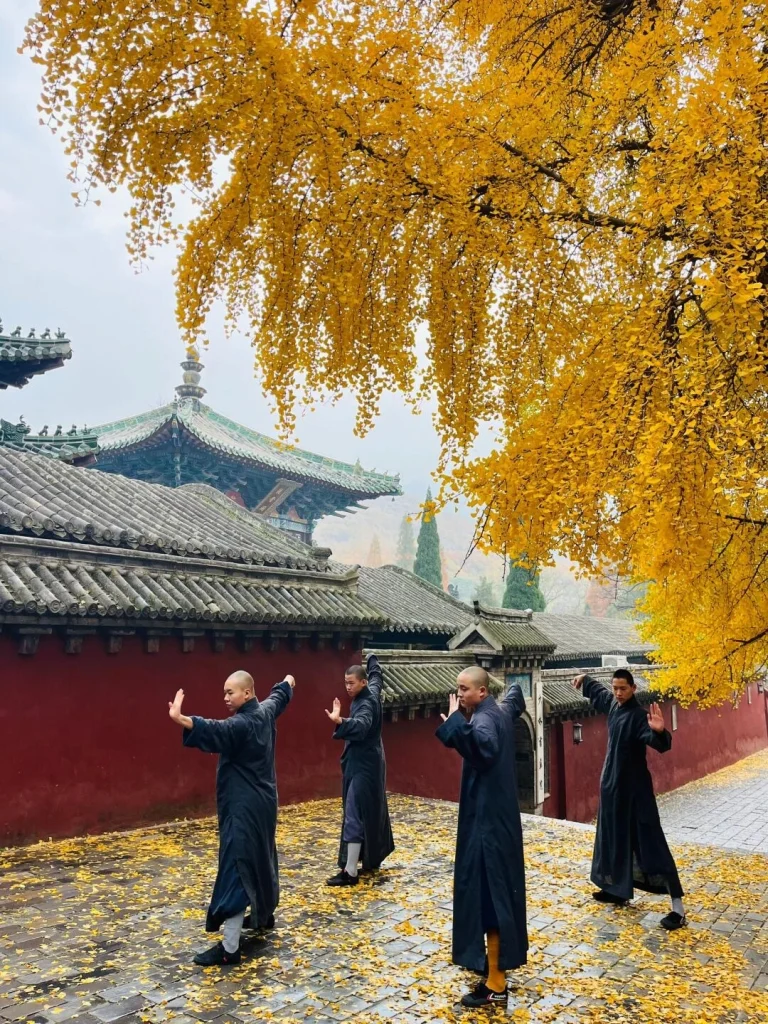
Shaolin monks practicing under golden ginkgo trees in autumn - 2026 Shaolin Temple Travel Guide: Plan Your Visit - The China Journey - 2026 Shaolin Temple Travel Guide: Plan Your Visit - The China Journey

These months are considered the best time to visit Shaolin. Temperatures range from 15°C to 25°C (59–77°F), making them perfect for outdoor activities like hiking and temple exploration.

  • Spring (April–May): Mount Song turns lush with fresh greenery and wildflowers. Cherry and crabapple blossoms surround the temple grounds, creating peaceful, photo-worthy scenes. The air is crisp and full of the scent of new growth — ideal for walking trails like the Sanhuangzhai hike.

  • Autumn (September–October): The hills blaze with red and gold, and the Pagoda Forest glows under warm sunlight. It’s an excellent time for those who enjoy both nature and culture, without the discomfort of summer heat.

Summer & Winter: Proceed with Caution

Shaolin Temple in snow with red lanterns and temple gate in winter - 2026 Shaolin Temple Travel Guide: Plan Your Visit - The China Journey - 2026 Shaolin Temple Travel Guide: Plan Your Visit - The China Journey
  • Summer (June–August): Midday temperatures often exceed 35°C (95°F), with strong sun and occasional downpours. Hiking can be exhausting, and sudden rain may affect mountain paths. If visiting during summer, plan for early morning or late afternoon, wear sunscreen, and carry rain gear.

  • Winter (December–February): Expect cold, dry days with temperatures near freezing. Some trails (like cliffside paths in Sanhuangzhai) may be icy and slippery. Visitor numbers are lower, and while it’s quieter, the scenery is less vibrant and Kung Fu shows may run on limited schedules.

For a broader seasonal comparison across the country, see Best Time to Visit China.

Tickets & Reservation Guide for Shaolin Temple (Updated 2025)

Starting July 31, 2025, Shaolin Temple has adopted new ticketing and reservation rules. Understanding them in advance will make your visit much smoother — especially for international travelers.

Ticket Prices & What’s Included

 
Daxiong Hall of Shaolin Temple with colorful rooftop and stone steps - 2026 Shaolin Temple Travel Guide: Plan Your Visit - The China Journey - 2026 Shaolin Temple Travel Guide: Plan Your Visit - The China Journey
  • Standard Entry Ticket: ¥80 per adult
    Includes access to the main temple complex (Changzhu Courtyard), Pagoda Forest, Sanhuangzhai scenic area, and the Shaolin Kung Fu show (regular sessions — no extra ticket required).

  • Shuttle Bus:
    ¥15 one-way / ¥25 round trip
    Covers a 5 km loop between the Visitor Center, main temple, Pagoda Forest, and Sanhuangzhai cable car station. Recommended if you’re short on time or energy.

  • Cable Cars:

    • Shaolin Cableway (to Sanhuangzhai cliff walk): ¥100 round trip / ¥70 one-way

    • Songyang Cableway (to Second Patriarch Temple): ¥60 round trip
      Both offer scenic views and save time for hikers.

  • Combo Tickets:
    If you plan to visit nearby sites like Songyang Academy or Zhongyue Temple, look for bundled tickets via official platforms for better value.

How to Book Tickets

 
Songshan scenic area ticket booking app showing Shaolin and Zhongyue - 2026 Shaolin Temple Travel Guide: Plan Your Visit - The China Journey - 2026 Shaolin Temple Travel Guide: Plan Your Visit - The China Journey
  • Online Reservation Required:
    All tickets (including minors) must be booked online through the official “Songshan Tourism” WeChat account or the “Wander Songshan” mini program. Major Chinese apps like Ctrip (Trip.com) and Meituan also support bookings.

  • Booking Window:
    Reservations must be made 2–7 days in advance. Same-day bookings are not accepted. During holidays like May Day or National Day, it’s best to book as early as possible due to limited daily capacity.

Special Notes for Foreign Travelers

  • Foreign Nationals, Hong Kong/Macau/Taiwan Visitors:
    After booking online, bring your passport or travel permit to the dedicated ticket window at the site to verify your ID and receive a physical entry pass.

  • Discounted/Free Entry Groups (e.g. military, persons with disabilities):
    Still allowed to purchase on-site at the designated service window. Valid documentation is required.

Must-See Attractions: From Zen Temples to Mountain Trails

Shaolin’s charm lies in its dual identity — half sacred temple, half mountain sanctuary. To make the most of your visit, explore both the core temple sites and the hidden natural wonders of Mount Song.

Temple Highlights: The Cultural Heart of Shaolin

1. Changzhu Courtyard (Main Temple Complex)

Changzhu Courtyard at Shaolin Temple with red halls and stone stairs - 2026 Shaolin Temple Travel Guide: Plan Your Visit - The China Journey - 2026 Shaolin Temple Travel Guide: Plan Your Visit - The China Journey

The spiritual and architectural core of Shaolin, arranged along a central axis with centuries of stories built into each hall.

  • Thousand Buddha Hall: The largest hall in the temple. Its floor holds 48 shallow dents — ancient training pits from Ming-era warrior monks. The wall mural “500 Arhats Paying Homage to Vairocana” is a priceless Ming dynasty artwork.

  • Mahavira Hall: Home to statues of Shakyamuni and other Buddhas. Early mornings offer a chance to hear monks chanting sutras.

  • Sutra Library Pavilion: Once stored the full Tripitaka. Today it displays iconic weapons like the Shaolin staff and broadsword, along with carved martial arts manuals.

Tips:

  • Allow ~1.5 hours to visit
  • No photos allowed inside halls
  • A guided tour makes the history easier to follow

2. Pagoda Forest

 
Pagoda Forest at Shaolin Temple featuring ancient brick stupas - 2026 Shaolin Temple Travel Guide: Plan Your Visit - The China Journey - 2026 Shaolin Temple Travel Guide: Plan Your Visit - The China Journey

Located west of the main courtyard, this is China’s largest cluster of monk tomb pagodas, with 248 ancient stone towers dating from the Tang to Qing dynasties.

Each pagoda’s size and style reflects the monk’s rank and legacy. Look for the Pagoda of Batuo (Shaolin’s founding master) and the Pagoda of Huike (2nd patriarch of Chan Buddhism).

Tips:

  • Walk clockwise around the site (Buddhist custom)
  • Visit time ~40 minutes
  • Please don’t touch the pagodas

3. Shaolin Kung Fu Show Hall

 
Shaolin monks performing martial arts show on stage with dramatic lighting - 2026 Shaolin Temple Travel Guide: Plan Your Visit - The China Journey - 2026 Shaolin Temple Travel Guide: Plan Your Visit - The China Journey

This is where you’ll witness authentic Shaolin martial arts up close — loud, fast, and unforgettable.

  • Signature acts include: Arhat Fist, staff combat, hard qigong (breaking iron bars with heads or spears on throats), and child acrobatics.

  • Show times:

    • Peak season (April–October): 4 daily shows (10:30, 11:30, 14:00, 15:00)

    • Low season: 3 shows/day, no early show

    • Arrive 15 min early for good seats

  • After the show, monks often offer photo ops for ¥20/person.

Mount Song Wonders: Nature Meets Zen

1. Sanhuangzhai Scenic Area

 
Scenic view of Sanhuangzhai cliffs and temples in Songshan Mountains - 2026 Shaolin Temple Travel Guide: Plan Your Visit - The China Journey - 2026 Shaolin Temple Travel Guide: Plan Your Visit - The China Journey

Just 3 km north of the temple, Sanhuangzhai is known for its steep cliffs, hanging walkways, and ancient rock formations.

  • Skywalk Cliff Path: A 3,000-meter walkway built into vertical rock walls. Look for “One Line Sky,” where the trail squeezes between two sheer rock faces — barely wide enough for one person.

  • Geological Marvels: See 3.6-billion-year-old rock layers like the “Book Cliff” and “Ganoderma Rock”, shaped like an open scroll and mushroom.

Tips:

  • Fit travelers can hike from Pagoda Forest (~3 hrs)
  • Or take the Shaolin Cable Car (¥100 round-trip) to save time

2. Damo Cave

 
Entrance to Damo Cave with visitor reading signboard on Wuru Peak - 2026 Shaolin Temple Travel Guide: Plan Your Visit - The China Journey - 2026 Shaolin Temple Travel Guide: Plan Your Visit - The China Journey

Midway up the Five Breast Peaks, this is where Bodhidharma is said to have meditated in silence for nine years.

  • Inside: The legendary “Shadow Rock”, said to contain the silhouette of Bodhidharma left on stone

  • Outside: The quiet Damo Pavilion and ancient pine trees — ideal for peaceful reflection

Tips:

  • 20-minute walk from the Sanhuangzhai cable car station
  • Best visited in early morning or evening for soft light and fewer crowds

3. First Patriarch Temple (Chuzu Nunnery)

 
Ancient hall of Chuzu Nunnery hidden in trees at Shaolin Temple - 2026 Shaolin Temple Travel Guide: Plan Your Visit - The China Journey - 2026 Shaolin Temple Travel Guide: Plan Your Visit - The China Journey

A lesser-known gem, built to honor Bodhidharma. Quiet, scenic, and full of architectural beauty.

Highlights:

  • Well-preserved Song dynasty wooden and brick carvings, including a grand hall built without nails

  • A 1,000-year-old ginkgo tree that turns golden in autumn

  • Free herbal tea inside for visitors who want to sit and rest

Tips:

  • ~30 minutes to visit
  • Easily combined with Damo Cave — same mountain route

Want to Explore More?

 
Gate of Songyang Academy, a historic Confucian school near Shaolin - 2026 Shaolin Temple Travel Guide: Plan Your Visit - The China Journey - 2026 Shaolin Temple Travel Guide: Plan Your Visit - The China Journey

If you have extra time, consider these nearby gems:

  • Zhongyue Temple (中岳庙): One of China’s largest Taoist complexes, with Han-era stone gates, Ming-Qing palaces, and the massive cast-iron “Iron Man” statue.

  • Songyang Academy (嵩阳书院): Once a hub of Neo-Confucian thought, this classical academy features ancient cypress trees and imperial calligraphy tablets.

  • Yongtai Temple (永泰寺): The first Buddhist nunnery in China, offering serene gardens, rare Northern Wei architecture, and a famous vegetarian “Arhat Feast.”

Food & Souvenirs: A Taste of Shaolin to Remember

A visit to Shaolin isn’t complete without trying its peaceful temple cuisine and hearty local snacks — or taking home a few thoughtful souvenirs that carry the spirit of Zen and Kung Fu.

Must-Try Flavors: From Temple Cuisine to Street Food

1. Shaolin Vegetarian Meals – Zen on a Plate

 
Traditional vegetarian meal at Shaolin Temple with Buddhist dishes - 2026 Shaolin Temple Travel Guide: Plan Your Visit - The China Journey - 2026 Shaolin Temple Travel Guide: Plan Your Visit - The China Journey

Inspired by Buddhist principles, Shaolin temple cuisine focuses on light, natural flavors, with creative use of tofu, mushrooms, and seasonal vegetables to mimic the texture of meat — without losing its earthy essence.

  • Luohan Stew (Arhat Hotpot): A nourishing mix of shiitake, king oyster mushrooms, wood ear, carrots, broccoli, and tofu simmered in a savory broth. It’s the signature dish of Shaolin vegetarian cooking.

  • Vegetarian Ham: Thin slices of smoked bean curd skin stuffed with mushrooms, offering a surprisingly meaty bite — best dipped in soy sauce.

Try the “Xiangji Kitchen” vegetarian restaurant inside the temple — peaceful setting, ~¥60–80 per person. Many local guesthouses also serve homestyle temple meals on request.

2. Local Snacks from Dengfeng – Bold, Warming, and Satisfying

 
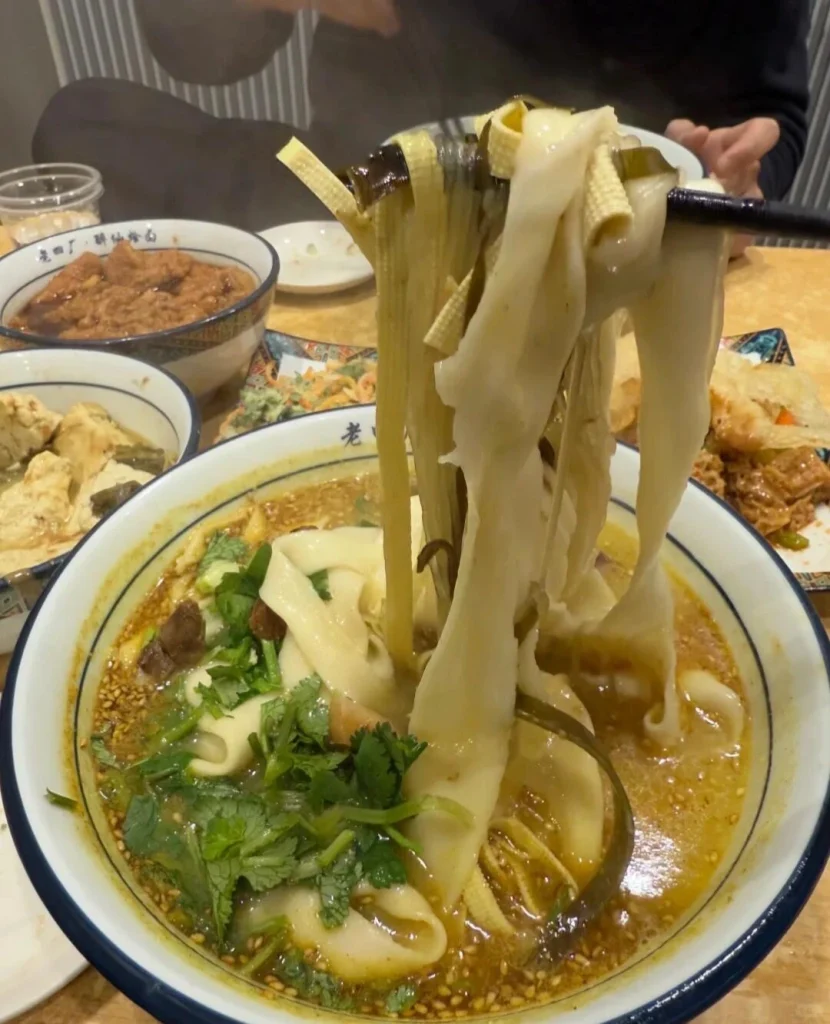
Bowl of Dengfeng style Hui Mian noodle soup with lamb and chili oil - 2026 Shaolin Temple Travel Guide: Plan Your Visit - The China Journey - 2026 Shaolin Temple Travel Guide: Plan Your Visit - The China Journey

After exploring the temple, head into Dengfeng city or nearby street stalls for authentic Henan flavors:

  • Dengfeng Hui Mian (Braised Lamb Noodles): A rich lamb broth with chewy hand-pulled noodles, cilantro, and chili oil. Warms you right up! Try it at “Dengfeng First Noodle” (~¥15).

  • Spicy Hu La Tang: A popular breakfast soup made with pepper, tofu shreds, fungus, and starch — tangy, spicy, and addictive. Pair it with fried dough or pan-fried buns (~¥8).

  • Stir-Fried Cold Jelly (Chao Liangfen): Cubes of mung bean jelly flash-fried with garlic shoots, soy sauce, and chilies. Crispy outside, soft inside — perfect late-night street food (~¥5).

Recommended Souvenirs: Gifts with a Shaolin Soul

 
Shaolin Temple cultural souvenir shop with monk mascot and gift items - 2026 Shaolin Temple Travel Guide: Plan Your Visit - The China Journey - 2026 Shaolin Temple Travel Guide: Plan Your Visit - The China Journey

1. Shaolin Sesame Pastries

Crunchy outside, nutty and slightly sweet inside, these pastries are made with sesame, peanuts, and walnuts — vacuum-packed and easy to carry.

Available at temple gift shops or local supermarkets (~¥20–30 per box).

2. Kung Fu Memorabilia

Bring home a piece of Shaolin’s martial spirit:

  • Mini Monk Figurines (¥50–100): Cute and symbolic desk decorations.

  • Kung Fu Manuals or Posters (¥30–50): Great for fans of traditional forms.

  • Mini Staff Replicas (¥80–150): Small but sturdy — perfect for collectors.

Look for these at official cultural souvenir shops near the entrance — better quality and authenticity guaranteed.

3. Zen-Inspired Accessories

For something more spiritual:

  • Prayer Beads (¥50–200): Made of sandalwood or bodhi seeds, often handmade — ideal for meditation or as a calm reminder of your trip.

  • Wooden Fish Pendants (¥30–80): Simple Buddhist charms that fit easily into daily life or travel bags.

One-Day Itinerary at Shaolin Temple (8:00–17:30)

This carefully timed day plan combines Shaolin’s cultural, martial, and natural highlights — perfect for first-time visitors who want to see it all in one go.

08:00 – Arrive at Visitor Center

Purchase tickets, check shuttle and show times, and grab a simple breakfast if needed.

Take the first sightseeing shuttle at 8:00 AM (¥25 round-trip) or walk 20 minutes to the main temple if you’re feeling active.

09:00–10:30 – Changzhu Courtyard: The Soul of Shaolin

 
Shaolin Temple Mahavira Hall — Front view of the main worship hall at Shaolin Temple, filled with incense smoke and visiting pilgrims - 2026 Shaolin Temple Travel Guide: Plan Your Visit - The China Journey - 2026 Shaolin Temple Travel Guide: Plan Your Visit - The China Journey

Explore the main temple complex in the cool morning hours:

  • Mountain Gate: Look for the plaque inscribed “Shaolin Temple” in Emperor Kangxi’s calligraphy. Great photo spot.

  • Thousand Buddha Hall: Don’t miss the 48 stone training dents left by Ming-era monks and the vivid mural “500 Arhats Paying Homage to Vairocana”. No photos allowed — observe quietly.

  • Scripture Library: See displays of traditional Shaolin weapons and carved Kung Fu manuals at the entrance.

Tip: Avoid the main tour group routes by veering left through the side halls. Arriving before 10:00 means fewer crowds for photos.

11:00–12:30 – Kung Fu Show & Pagoda Forest

 
Shaolin Kung Fu performance — Shaolin monks demonstrating traditional martial arts poses in front of the temple courtyard - 2026 Shaolin Temple Travel Guide: Plan Your Visit - The China Journey - 2026 Shaolin Temple Travel Guide: Plan Your Visit - The China Journey
  • Kung Fu Show (11:00–11:30)
    Arrive by 10:30 to grab a front-row seat at the Martial Arts Performance Hall. Expect classic routines like Luohan Fist, staff duels, and “Iron Body” stunts. Afterward, you can take photos with the performers (¥20/person, optional).

  • Pagoda Forest (11:30–12:30)
    Just 10 minutes west of the performance hall. This ancient cemetery holds 248 stone pagodas from the Tang to Qing dynasties.
    Walk clockwise and look for the Batuo Pagoda (founder’s tomb) and Huike Pagoda (2nd patriarch). Each pagoda’s shape tells a story — many guides offer free narration you can tag along with.

  • Lunch Nearby
    Try Huaxidi Vegetarian Restaurant next to the forest. Order the Luohan Stew (¥68) and Vegetarian Ham (¥38) — hearty and flavorful. Add a side of Shaolin sesame pastry (¥10). Expect ~¥80/person.

13:30–16:30 – Sanhuangzhai Cliff Trail: Nature Meets Zen

 
Sanhhuangzhai Cliff Walk, Mount Song — Visitors hiking along the suspended cliff walkway amid the dramatic rock formations of Songshan Mountain - 2026 Shaolin Temple Travel Guide: Plan Your Visit - The China Journey - 2026 Shaolin Temple Travel Guide: Plan Your Visit - The China Journey
  • Getting There:
    Walk 3 minutes from Pagoda Forest to the Shaolin Cableway station. Take the 10-minute ride to the Watershed Overlook (¥70 one-way / ¥100 round-trip). Saves 2+ hours of uphill hiking.

  • Hiking Route (~1.5 hrs, moderate difficulty)
    Watershed → Cliff Walk → Book Cliff → Sky Bridge → Stone Gate (return)

    • Walk along a dramatic 3,000-meter cliffside plank road with epic valley views.

    • Pass through Yixiantian, a one-person-wide stone crevice — thrilling and photogenic.

    • At Book Cliff, touch 3.6-billion-year-old layers of Dengfeng rock — a geologic wonder.

Be sure to reach the cableway upper station by 16:30. It closes at 17:00 — miss it, and you’ll need to walk two hours down.

16:30–17:30 – Return & Souvenir Stop

Take the cableway down and ride the shuttle back to the Visitor Center. On your way out:

  • Browse temple souvenir shops

  • Pick up Shaolin sesame pastries (¥25/box) or a mini monk statue (¥80 each) as a memory of your day

Practical Tips & Traveler Advice

1. What to Pack

Wear comfortable walking shoes — expect stairs and uneven paths. Bring a light jacket (mornings can be cool), sunscreen, a hat, and a refillable water bottle, especially if you plan to hike Sanhuangzhai.

For a complete checklist covering different seasons and destinations, see What to Pack for China.

2. Temple Etiquette

Inside halls, speak quietly, remove hats, and never touch statues or altars. Join your palms and bow slightly when greeting monks or entering sacred spaces.

3. Photography Rules

Photos are not allowed inside most halls, especially the Thousand Buddha Hall. Look for signs and always ask before photographing monks.

4. Beat the Crowds

Arrive before 9:00 AM to enjoy the main temple and pagoda forest with fewer tour groups. Avoid national holidays like May Day (May 1) and Golden Week (October 1–7).

5. Health & Safety

The temple sits at low altitude, but hikes like Sanhuangzhai involve steep paths. Bring basic first aid (band-aids, blister pads), and avoid the cliff trail if you have vertigo or knee issues.

6. Language & Signs

Most signs are in Chinese and English, but don’t expect fluent English from staff. Useful phrases:

  • “Shaolin Temple” = 少林寺 (Shàolínsì)

  • “Where is the bus?” = 公交车在哪?(Gōngjiāo chē zài nǎ?)

7. Money & Payments

Mobile payments (WeChat Pay, Alipay) are widely used, but cash (RMB) is still accepted. Credit cards may not work, so carry small bills for snacks, transport, and souvenirs.

To explore how Shaolin fits into a broader China itinerary, see Best Places & Cities to Visit in China.

8. Vendors & Souvenirs

Stick to official shops for better quality and fair pricing. Be polite but firm when declining street vendors. Bargaining is acceptable in Dengfeng markets, but not at temple stores.

9. Helpful Apps

Download:

  • Baidu Maps or Amap (with offline navigation)

  • Pleco (Chinese-English dictionary)

  • Ctrip (Trip.com) for transport & ticket booking

  • WeChat for scanning QR codes and local updates

10. Emergency Contacts

  • Tourist Info: at the Visitor Center

  • Medical: Dengfeng People’s Hospital (登封市人民医院)

  • Police: ☎️ 110 | Emergency Medical: ☎️ 120

  • Lost & Found: Ask temple staff or shuttle drivers for help

For general planning, payments, apps, and first-time travel advice, see China Travel Tips: The Best Guide You Can Find.

Recommended Nearby Attractions

If you have extra time around your Shaolin Temple visit, consider extending your trip to these cultural gems in nearby cities.

White Horse Temple, Luoyang

The Cradle of Chinese Buddhism

 
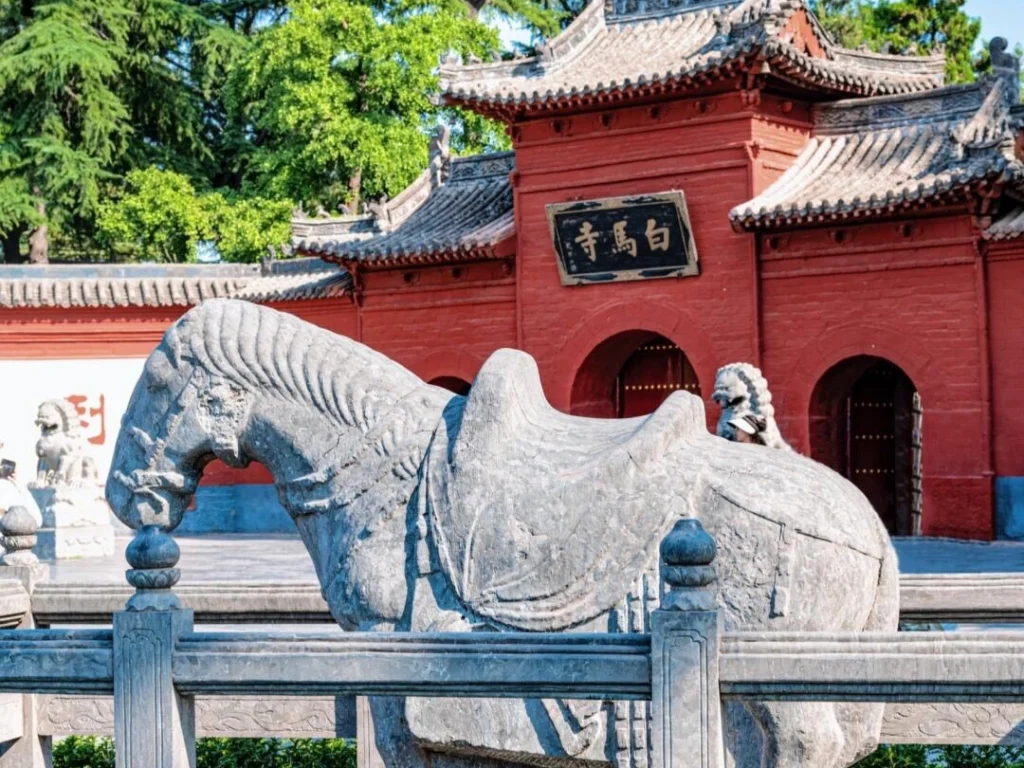
White Horse Temple, Luoyang Ancient stone horse sculpture in front of White Horse Temple, the first Buddhist temple in China. - 2026 Shaolin Temple Travel Guide: Plan Your Visit - The China Journey - 2026 Shaolin Temple Travel Guide: Plan Your Visit - The China Journey

Built in 68 AD, White Horse Temple is considered the first official Buddhist temple in China, earning it the title “Ancestor Temple of Buddhism in China.” Inside, you’ll find rare Yuan dynasty lacquered clay statues, such as the fierce guardian Weituo, and Ming dynasty murals that depict the life of Shakyamuni.

Don’t miss the International Buddha Halls, where Thai-style golden stupas, Indian prayer pavilions, and Burmese pagodas stand side by side — offering a glimpse of Southeast Asian Buddhist architecture without leaving China.

Longmen Grottoes, Luoyang

A Carved Masterpiece of Faith and Art

 
Tourists visiting Longmen Grottoes at night with illuminated giant Buddha statues - 2026 Shaolin Temple Travel Guide: Plan Your Visit - The China Journey - 2026 Shaolin Temple Travel Guide: Plan Your Visit - The China Journey

A UNESCO World Heritage Site, the Longmen Grottoes house over 100,000 Buddhist statues carved into limestone cliffs along the Yi River — some dating back to the Northern Wei Dynasty (5th century). The star attraction is the 17-meter-tall Vairocana Buddha, commissioned by Empress Wu Zetian herself.

Use an optional AR headset (¥30) to digitally reconstruct the original painted statues, and visit the “Infinite Longmen” Experience Hall (¥80) for a 360° immersive show of the grottoes’ creation. In the evening, don’t miss the “Longmen Illusion” Light Show (7:30–9:00 PM) — a spectacular mix of lights, music, and ancient sculpture set against the grand Buddha.

Qingming Riverside Park, Kaifeng

A Lively Re-creation of Song Dynasty Life

Kaifeng Millennium City Park night view — Colorful lights and performances illuminating the recreated Song‑dynasty cityscape at Qingming Riverside Landscape Garden - 2026 Shaolin Temple Travel Guide: Plan Your Visit - The China Journey - 2026 Shaolin Temple Travel Guide: Plan Your Visit - The China Journey

Modeled after the famous scroll painting “Along the River During the Qingming Festival”, this Song Dynasty-themed park in Kaifeng brings ancient Bianjing (now Kaifeng) to life with over 50 daily live performances.

Top experiences include:

  • Canal Ride under Rainbow Bridge (10:00 / 15:00): Ride a traditional cargo boat through a reimagined Song-era port scene.

  • “Defense of Dongjing” War Show (16:30): A large-scale battle reenactment with fire, water, and stunt effects.

  • Night Show: “Dream of Dongjing” (20:10): 700 actors perform on a lakeside stage, bringing classical Chinese poetry to life.

While you’re there, stroll the Song-style snack street — try almond tea (¥5) and sugar figurines (¥10) for a flavorful taste of ancient Kaifeng.

To explore how Shaolin fits into a broader China itinerary, see Best Places & Cities to Visit in China.

Interesting Articles for You

Zhuhai Travel Guide cover showing coastal skyline Opera House islands and Pearl River scenery - 2026 Zhuhai Travel Guide: Islands, City & Coastal Charm - The China Journey - 2026 Shaolin Temple Travel Guide: Plan Your Visit - The China Journey
Travel Guide

Zhuhai Travel Guide

Discover Zhuhai’s beauty — a relaxing coastal city in South China with island getaways, seaside walks, Cantonese cuisine, and easy access to Macau.

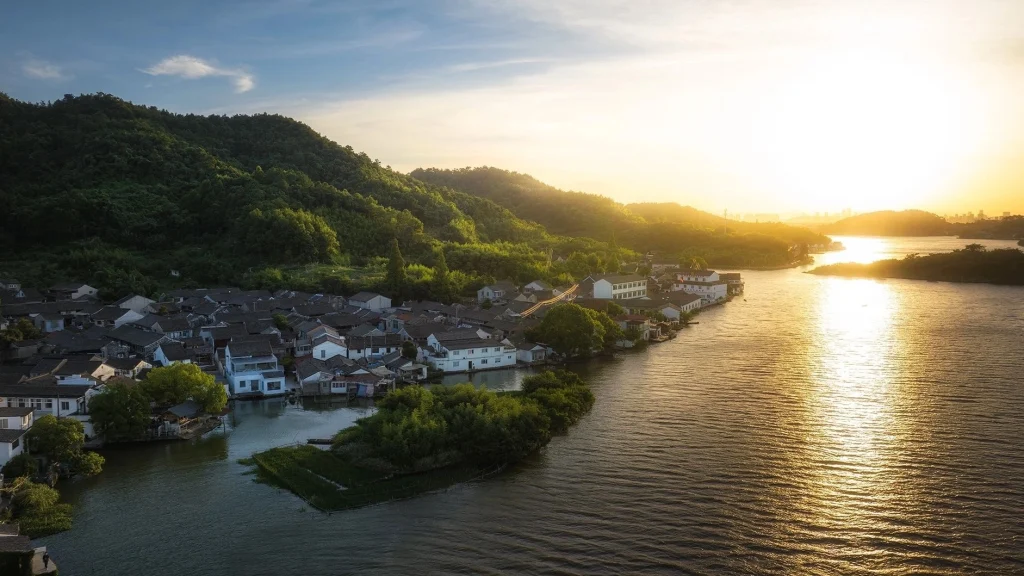
Ningbo Sunset Landscape A stunning sunset over the water with traditional houses along the riverside creating a tranquil atmosphere - Ningbo, the Cultural Capital of East Asia 2026 - The China Journey - 2026 Shaolin Temple Travel Guide: Plan Your Visit - The China Journey
City

Ningbo

Discover Ningbo, a historical port city with a rich cultural heritage, including the ancient Tianyi Pavilion, and its importance as the starting point of the Maritime Silk Road.

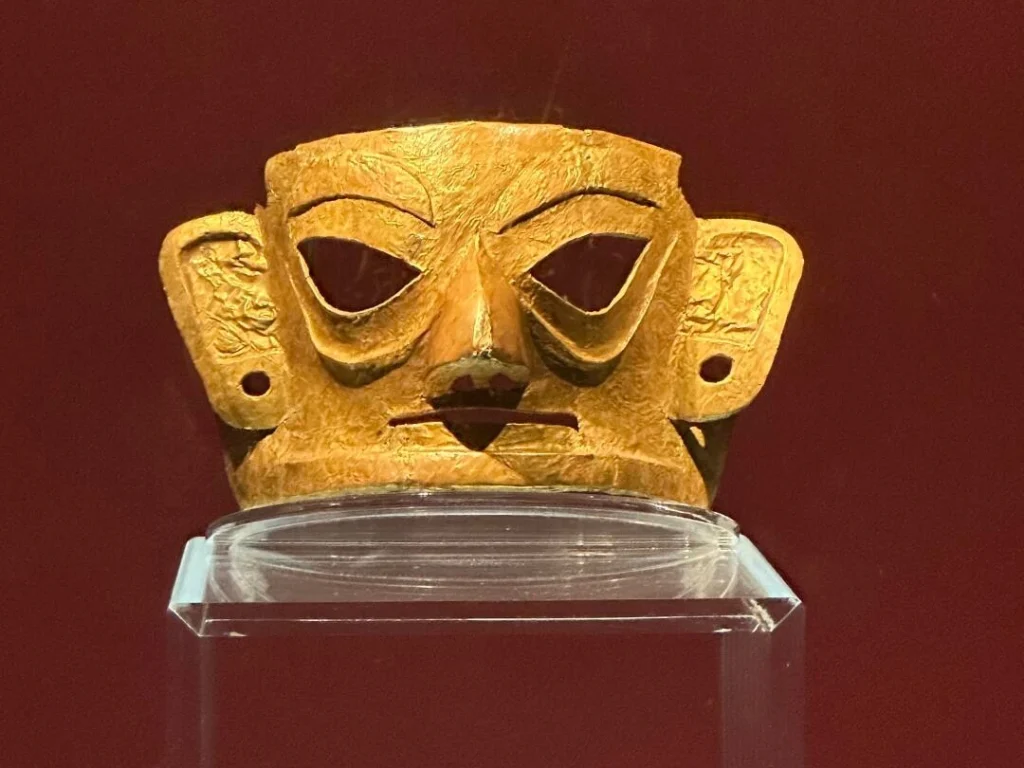
Golden mask from Sanxingdui culture on display at Jinsha Site Museum in Chengdu - What is the history of Chengdu? 2026 - The China Journey - 2026 Shaolin Temple Travel Guide: Plan Your Visit - The China Journey
FAQs

What is the history of Chengdu?

Chengdu’s history spans 4,500 years from ancient Shu civilization to today’s modern hub, marked by irrigation marvels, silk trade, Three Kingdoms legacy, and cultural resilience.

Aerial view of Gulangyu Island and Xiamen city skyline - Gulangyu Travel Guide: Island of Music & Heritage 2026 - The China Journey - 2026 Shaolin Temple Travel Guide: Plan Your Visit - The China Journey
Travel Guide

Gulangyu Travel Guide

Explore Gulangyu Island near Xiamen — a UNESCO World Heritage site known for its car-free charm, seaside scenery, colonial villas, and cultural fusion.

happy tourists exploring city map diverse travelers sitting in park checking map and planning urban sightseeing route - 2026 Shaolin Temple Travel Guide: Plan Your Visit - The China Journey

Plan Your China Trip with Our Experts

Share your travel ideas, and we’ll help you plan a smooth, personalized trip across China.

 
travelers planning route with map group of international tourists reading map outdoors with backpacks and guide - 2026 Shaolin Temple Travel Guide: Plan Your Visit - The China Journey
happy tourists exploring city map diverse travelers sitting in park checking map and planning urban sightseeing route - 2026 Shaolin Temple Travel Guide: Plan Your Visit - The China Journey

Work with Us as a Local Guide in China

travelers planning route with map group of international tourists reading map outdoors with backpacks and guide - 2026 Shaolin Temple Travel Guide: Plan Your Visit - The China Journey

We’re looking for experienced, part-time local guides to serve international travelers.

Requirements:

• Fluent in at least one foreign language
• 3–5 years guiding international visitors
• Able to operate in multiple regions in China
• Competitive and reasonable pricing
• Proven customer reviews or testimonials
• Professional, reliable, and responsive
• Flexible availability for custom trips

Hi there!

Just a quick heads-up — a helpful user named Volker let me know that some of the non-English content on this site may not be accurate.

This site is a one-person project I run part-time. I research and publish all the content myself, and the translations are currently done by machine (Google Translate). Balancing accuracy and accessibility across multiple languages is a real challenge.

If you spot any errors, I recommend switching to the English version using the button at the bottom left. I’ll continue working to improve the translations over time.

I truly appreciate your understanding. And if you have any suggestions, feel free to leave a comment — it means a lot to me.

— Anthony 2025.6.18

Xian long image for popup form - 2026 Shaolin Temple Travel Guide: Plan Your Visit - The China Journey

Planning a Trip to China?

Changzhou Skyline at Dusk The Changzhou skyline illuminated at dusk, with city lights reflecting on the water and buildings glowing in the evening light. - 2026 Shaolin Temple Travel Guide: Plan Your Visit - The China Journey
Do any of these sound familiar from your past trips?
Let our trusted partner travel agency handle the details.
👉 Get a custom plan within your budget and enjoy the best of China — stress-free.